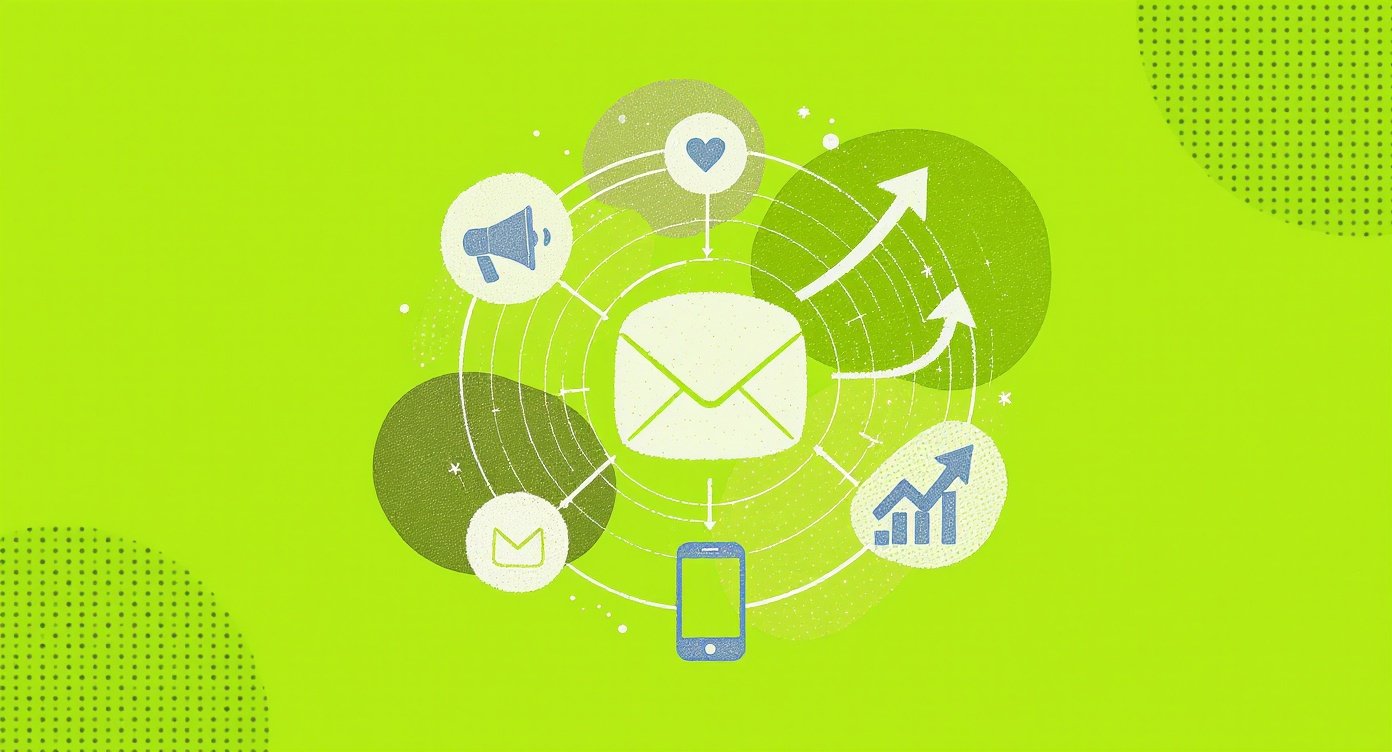
Nonprofit leaders face an increasingly difficult challenge: do more with less. Your mission is critical, but your team is stretched thin. Email campaigns need coordinating, donor data requires updating, thank-yous must be sent, and engagement must continue—all while keeping costs down. Multi-channel automation isn’t a luxury anymore; it’s essential infrastructure for organizations serious about maximizing their impact and revenue without burning out their staff.
Here’s a compelling reason to pay attention: organizations using multichannel strategies achieve 24% higher ROI than those relying on a single channel (Blue Cactus Digital). For nonprofits specifically, this advantage becomes even more significant because automation enables you to deliver personalized donor experiences at scale—something your small team simply cannot achieve manually.
The Fundamental ROI Case for Automation
What does automation actually deliver? The numbers speak clearly. Repetitive manual tasks—data entry, sending thank-yous, processing donations—consume approximately 62% of a workday (Help You Sponsor). Automation reclaims this time for relationship-building and strategy. Beyond time savings, nonprofits using marketing automation see an average increase of 451% in qualified leads and 77% more conversions compared to manual processes (Done For You).
The financial benefits extend further. Automation can cut operational costs by 15–20% while reducing manual work by 20–30% (Help You Sponsor). But perhaps the most powerful metric is this: a 10% improvement in donor retention can lead to a 200% increase in giving over time (Help You Sponsor). This is where multi-channel automation truly shines, keeping donors engaged consistently across every touchpoint.
The math is clear: automation pays for itself quickly while freeing your team to focus on what humans do best—building authentic relationships and advancing your mission.
Why Multiple Channels Matter
Your donors aren’t using just one communication method. Some prefer email, others respond to direct mail, younger supporters engage via text message, and many expect a seamless experience across all channels. Single-channel strategies miss valuable engagement opportunities.
Multi-channel automation ensures your supporters receive consistent, personalized messaging wherever they prefer to engage—without requiring your team to manually coordinate campaigns across platforms.
Protip: Start by mapping where your donors actually spend their attention. Don’t assume—check your engagement data to see which channels drive responses, then build automation around those proven touchpoints first.
Understanding Multi-Channel Automation: Core Components
Multi-channel automation combines CRM systems, email platforms, SMS tools, direct mail integration, and social media scheduling into one coordinated strategy. Rather than managing separate, siloed systems, this approach ensures donor data flows seamlessly between channels while campaigns trigger automatically based on supporter behavior.
Key channels to integrate:
| Channel | Impact | Best Use Case |
|---|---|---|
| Email campaigns | 33% of donors say email most inspires them to give (Nonprofit Tech for Good) | Storytelling, impact updates, cultivation sequences |
| Text messaging & SMS | Immediate delivery and high open rates | Time-sensitive appeals, event reminders, quick updates |
| Direct mail | High trust factor with major donors | Personalized appeals, annual campaigns, stewardship |
| Social media | Broad reach and shareability | Awareness building, peer influence, event promotion |
| Online donation forms | 24/7 accessibility | Convenient giving options post-outreach |
The magic happens when these channels work in concert. Automation warms prospects with email before direct mail arrives, follows up with SMS after an event, sends anniversary thank-yous automatically, and reactivates lapsed donors at precisely the right moment.
Real-World Impact: Success Stories From the Field
Goodwill’s Transformation
Goodwill implemented comprehensive automation across donor communications with remarkable results: a 35% increase in online donations, 50% improvement in donor retention rates, and 30 hours saved per week in staff time (Done For You). They managed over 50,000 supporters while dramatically reducing their routine communication workload.
Their strategy? Segment email lists based on behavior, trigger welcome series for new donors, launch LYBUNT (Last Year But Unfortunately Not This) reactivation campaigns automatically, and follow up after events—all without manual intervention.
Big Brothers Big Sisters’ Multi-Channel Win
Big Brothers Big Sisters of America adopted an omnichannel automation strategy combining email, text messaging, and direct mail. The results included a 25% increase in average gift size, 40% improvement in donor lifetime value, and 22% of volunteers converted to financial donors through automated education sequences (Done For You).
Their key insight: automated sequences that educate volunteers about funding needs have direct fundraising impact. This approach enabled them to nurture relationships they didn’t have capacity to manage manually.
The Four Pillars of Multi-Channel Automation ROI
1. Donor Segmentation & Personalization at Scale
The Problem: Your development coordinator can personally craft 50 messages. But you have 5,000 donors.
The Solution: Automation segments supporters based on:
- giving history (high-value donors receive different messaging than new supporters),
- giving frequency (monthly recurring donors need different nurture sequences than annual givers),
- engagement level (engaged supporters receive richer content while at-risk donors get reactivation appeals),
- preferred communication channel,
- specific interests like event attendance or volunteer participation.
2. Automated Donor Journeys: Thank-Yous, Stewardship & Retention
Donor retention is the hidden lever for nonprofit growth. Monthly recurring donors are retained at 85–90%, while average nonprofit retention sits at just 45% (DonorPerfect). Multi-channel automation builds these sticky relationships automatically.
Essential automated sequences:
- Welcome series (new donors): Multi-part sequence introducing mission, sharing impact stories, providing next engagement steps,
- Donation anniversaries: Recognize giving anniversaries with personalized messages highlighting cumulative impact,
- Timely thank-yous: Donors who receive acknowledgment within 24 hours are far more likely to give again,
- Impact reporting: Automated reports showing supporters the results of their giving,
- Reactivation campaigns: LYBUNT sequences reaching lapsed supporters with compelling re-engagement,
- Event follow-ups: Post-event sequences thanking attendees and inviting continued involvement,
- Volunteer-to-donor journeys: Convert volunteers to financial supporters by sharing funding needs at optimal moments.
Research shows that automated email series boost reply and engagement rates by 250% (Campaign Monitor)—without adding a single staff member.
Protip: Don’t try to automate everything simultaneously. Master one sequence before adding the next. Perfecting welcome sequences (which touch every new donor) often delivers better ROI than optimizing a campaign that reaches only 5% of your list.
AI Prompt: Build Your Multi-Channel Donor Journey
Ready to design your first automated donor journey? Copy this prompt and paste it into ChatGPT, Gemini, Perplexity, or check out our custom tools and calculators for nonprofit-specific generators:
Create a 60-day automated donor journey for [DONOR SEGMENT] who just [DONOR ACTION]. The journey should include [NUMBER OF TOUCHPOINTS] touchpoints across email, SMS, and direct mail. Our nonprofit's mission is [YOUR MISSION]. Include specific messaging themes, optimal timing between touchpoints, and clear calls-to-action for each communication that moves donors deeper into engagement.Variables to customize:
- [DONOR SEGMENT] – Examples: first-time donors, lapsed donors, event attendees, monthly givers
- [DONOR ACTION] – Examples: made their first donation, attended an event, volunteered, stopped giving
- [NUMBER OF TOUCHPOINTS] – Suggest 5-8 for most journeys
- [YOUR MISSION] – Brief description of your cause
This prompt generates a complete communication strategy you can implement immediately in your automation platform.
3. Mail Plus Digital: Combining Channels for 15–25% Higher Response
The most sophisticated nonprofits aren’t choosing between direct mail and digital—they’re combining them strategically. Automated email sequences warm prospects before direct mail arrives, increasing familiarity. The physical piece captures attention in cluttered inboxes, while automated follow-up emails reinforce the message and provide convenient online giving options. Together, they create multiple touchpoints guiding donors through a cohesive journey.
Research shows mail-plus-digital campaigns increase response rates by 15–25% compared to single-channel efforts (Done For You).
Advanced nonprofits use variable data printing (personalizing physical mail) and then trigger automated email sequences based on the specific content each donor received. This level of coordination requires the right platform but delivers exceptional ROI.
4. Predictive Analytics & Data-Driven Optimization
What separates high-performing nonprofits from struggling ones? Using data to predict behavior, not just report on it.
Multi-channel automation platforms increasingly include AI-powered predictive analytics that identify:
- who’s most likely to increase giving (so you can proactively contact them with upgraded opportunities),
- who’s at risk of lapsing (enabling intervention before they leave),
- optimal contact timing for each donor,
- channel preferences,
- propensity scores indicating data-driven confidence levels for reactivation likelihood.
Nonprofits using predictive analytics to guide reactivation achieve a 10% recapture rate versus the industry benchmark of 4% (Dataro)—a 150% improvement.
Protip: If your nonprofit still relies primarily on direct mail, your first automation project should be adding email warm-up sequences before mail drop and email follow-up after. This simple addition can increase direct mail response rates by 20% without additional staff costs.
The Funraise Advantage: What Integrated Platforms Deliver
When you’re ready to implement multi-channel automation, choosing the right platform makes all the difference. Funraise exemplifies modern fundraising infrastructure built specifically for nonprofits—and they offer a free tier so you can start with no commitments.
Key capabilities that drive ROI:
- 50% donation form conversion rate through smart pop-up optimization (Funraise),
- Integrated email and SMS messaging: Orchestrate campaigns across channels from one dashboard,
- Automated donation processing: Receipts and thank-yous trigger instantly without staff intervention,
- 52% average annual recurring revenue growth for organizations using Funraise,
- Real-time reporting and custom dashboards: Data-driven decisions happen instantly, not days later.
Platforms like Funraise eliminate data silos—the primary reason multi-channel automation fails at many nonprofits. When donor information lives in separate systems, coordination becomes nearly impossible. Integrated platforms ensure every touchpoint has access to the complete donor story.
Organizations using Funraise grow their online donation revenue 3x faster than industry norms while their teams focus on mission advancement rather than technical juggling. The best part? You can start exploring these capabilities for free and scale as your automation sophistication grows.
Measuring Multi-Channel Automation ROI
You can’t improve what you don’t measure. Here’s exactly what to track:
Fundraising Metrics
- Online donation revenue growth: Compare before/after automation implementation,
- Donor retention rate: Track percentage of donors giving again in subsequent year,
- Average gift size: Monitor whether personalization drives larger gifts,
- Cost per dollar raised: Measure efficiency improvement,
- Recurring donation growth: Sustained revenue is automation’s best metric,
- Volunteer-to-donor conversion: How many volunteers become financial supporters?
Operational Metrics
- Staff hours saved: Time reclaimed from routine communications and data entry,
- Error reduction: Fewer manual mistakes means fewer corrections and rework,
- Processing time: How fast do receipts and thank-yous send post-donation?,
- Campaign response time: How quickly can you launch timely campaigns?
Sample ROI Calculation:
- Automation platform: $2,000/month
- Time saved for development coordinator: 10 hours/week = $400/week = $1,600/month value
- Additional donations from improved follow-up: $3,000/month
- Monthly ROI benefit: $4,600 (more than 2x the platform cost)
- Payback period: Less than 1 month
- Annual net benefit: $27,600
Protip: Set baseline metrics before launching automation. Track improvements monthly and adjust sequences based on data, not assumptions. The organizations seeing 3x growth aren’t guessing—they’re measuring obsessively.
Common Pitfalls & How to Avoid Them
Over-Automation: The Impersonal Trap
Problem: Automated messages with zero personalization feel cold and spam-like.
Solution: Use segment-level personalization. Acknowledge giving history, recognize donors by name, reference their interests. Automation should enhance relationships, not replace them.
Siloed Data: The Anti-Integration Nightmare
Problem: Email platform doesn’t talk to your CRM, direct mail tool operates independently, SMS lives in yet another system.
Solution: Invest in an integrated platform or ensure your tools sync automatically. Data silos make multi-channel automation impossible. Starting with comprehensive platforms like Funraise saves headaches—everything connects natively.
Automation Without Strategy: Sending Noise
Problem: Automating every possible message leads to donor fatigue and unsubscribes.
Solution: Plan your donor journeys intentionally. What message does each segment need at each stage? When should they receive it? Less-frequent, highly relevant communication outperforms daily noise.
Your Next Steps: Building Momentum Without Overwhelm
Multi-channel automation isn’t about technology—it’s about maximizing impact while respecting your team’s time and energy. When you automate the routine, your nonprofit does what it does best: build relationships and change lives.
Your first action:
- Audit your current process: Map every touchpoint in your donor journey. Where are you manually doing work that could be automated?
- Identify your biggest bottleneck: Is it thank-yous? Email campaigns? Donor data entry? Event follow-ups?
- Research integrated platforms: Explore solutions purpose-built for nonprofits (like Funraise’s free tier) rather than trying to connect disconnected tools
- Start small: Build one automated sequence well rather than launching ten mediocre ones
- Measure obsessively: Track metrics before and after to prove ROI
The organizations winning at fundraising aren’t those with the biggest budgets—they’re those using their resources most efficiently. Multi-channel automation is how small teams achieve big results. With 67% of donors agreeing nonprofits should use AI for marketing and fundraising (Nonprofit Tech for Good), the expectation is already there. Your donors want efficient, personalized communication—automation delivers exactly that while freeing your team from burnout.
Ready to explore what’s possible? Test drive automation through platforms offering free tiers and see firsthand how a few smart sequences transform your donor relationships and revenue growth.
AI-Assisted Donor Research: How to Work Smarter in 2026
Nonprofit leaders know the struggle: finding major donors with a skeleton crew while expectations keep climbing. Maybe you're buried in spreadsheets, following hunches about potential givers, watching opportunities slip through the cracks. Sound familiar? Here's the thing—AI transforms donor research from tedious manual labor into sharp, scalable intelligence. You'll reach the right people with better…
How AI is Transforming Marketing Automation for Small NGOs
Small nonprofits live in a constant state of doing more with less—tighter budgets, smaller teams, missions that never sleep. Meanwhile, donor expectations keep rising and the competition for attention grows fiercer. Traditional marketing demands resources you simply don't have. That's where artificial intelligence and marketing automation come in, fundamentally changing how small NGOs connect with…
Proving the ROI of Your Nonprofit Marketing Efforts to Sceptical Stakeholders
Nonprofit leaders know this scenario all too well: you've just wrapped up a successful campaign, but when you present the results to your board, you're met with raised eyebrows and pointed questions. "Is our marketing spend really worth it?" Proving marketing ROI transforms skepticism into support by connecting every dollar spent to measurable mission impact.…