Look, here’s the thing that probably keeps you up at night: you’re working so hard to bring in new donors, and then… they just disappear. Never give again. Never respond to emails. It’s like throwing a party where everyone shows up once and ghosts you forever.
But what if the problem isn’t that you need more donors? What if you just need to guide the ones you already have through a journey that actually makes sense? That’s where the donor cycle comes in. We’re gonna walk through how to turn those one-time gifts into the kind of partnerships that actually sustain your mission, without burning out your tiny team in the process.
Understanding the Donor Cycle Framework
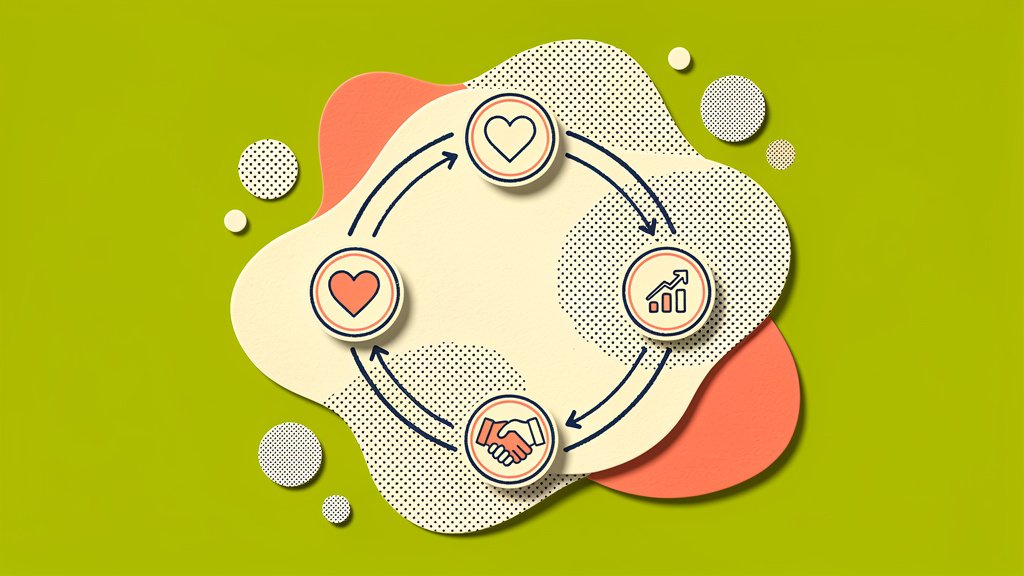
The donor cycle has five stages that build on each other: identification, qualification, cultivation, solicitation, and stewardship. Think of it as a pathway guiding supporters from “Hey, I just heard about you” to “I’m in this for the long haul.”
For nonprofits working with lean teams (so, most of you), this framework isn’t some nice-to-have strategy. It’s how you grow without constantly scrambling for new faces.
Stage 1: Identification – Finding Your Future Partners
So where do you actually find potential supporters? Well, you meet them where they already hang out. Social media, SEO-optimized content, peer-to-peer campaigns—these let people discover your mission organically instead of feeling like you’re stalking them.
Here’s something you might not expect: payment methods matter more than you’d think. Organizations accepting digital wallets like Apple Pay see 160% higher average gifts (CFRE). Turns out, making it stupid-easy to give actually works.
Three approaches that won’t overwhelm small teams:
- website pop-ups on every page for contextual giving opportunities,
- peer-to-peer fundraisers that expand your reach through personal networks,
- digital wallet integration across all donation touchpoints.
Protip: Don’t overcomplicate this. Focus on one new channel per quarter, actually master it, then expand. We’ve seen too many teams try everything at once and end up burned out with zero results.
Stage 2: Qualification – Assessing Donor Potential
Okay, real talk: not every donor should get the same attention. First-time online donor retention averages just 29% (Dataro), which means you need to figure out early who’s worth cultivating more intensively.
Qualification just means segmenting donors by gift size, frequency, and how they’re actually engaging with you. Your CRM can track this stuff. Post-gift surveys and behavioral data reveal who’s likely to stick around and who needs a different approach.
| Qualification Factor | What to Track | Action Threshold |
|---|---|---|
| Gift Size | Amount relative to peers | Top 20% = major donor pathway |
| Engagement | Email opens, event attendance | 3+ touchpoints = cultivation priority |
| Speed of First Gift | Days from awareness to donation | <7 days = high intent |
Real-World Challenges We See Daily
In our experience working with nonprofits before they switch to platforms like Funraise, we see the same struggles over and over:
The “Thank You Black Hole”: You send a generic automated email, then crickets for months. First-time donors are left wondering if their gift even mattered.
The Manual Segmentation Nightmare: Your team spends hours building spreadsheets to segment donors, and by the time you’re done, the data’s already stale. The moment for personalized outreach? Long gone.
The Recurring Gift Oversight: Your donation forms don’t have one-click recurring options. You’re literally missing the easiest conversion opportunity that exists.
The Tech Stack Chaos: You’re juggling separate platforms for forms, email, CRM, and analytics. Data lives everywhere and nowhere. You can’t see the complete donor journey, so strategic decisions are basically guesswork.
Stage 3: Cultivation – Building Emotional Connections
Cultivation’s where you transform transactions into actual relationships. And here’s why it matters: recurring givers retain at 83% versus 45% for one-time donors (Funraise). Monthly commitments create ongoing emotional investment.
Multichannel cultivation works best:
- email sequences sharing specific program outcomes,
- text messages (95% open rates, by the way) for urgent updates,
- exclusive webinars connecting donors to mission impact,
- handwritten notes at relationship milestones.
Protip: Create a simple stewardship matrix mapping touchpoints to timeframes. Thank within 48 hours, send impact update at two weeks, extend recurring invitation at one month. Consistency beats perfection every single time.
AI Prompt: Build Your Custom Donor Journey
Ready to map your specific donor cycle? Copy this prompt into ChatGPT, Gemini, or Perplexity (or use our tools and calculators):
Create a 90-day donor cultivation plan for [YOUR NONPROFIT TYPE] converting first-time donors who gave [AVERAGE GIFT AMOUNT]. Our team has [TEAM SIZE/CAPACITY]. Include specific touchpoints, messaging themes, and conversion milestones for turning them into monthly recurring donors. Focus on [YOUR PRIMARY PROGRAM/IMPACT AREA].

Variables to customize:
1. YOUR NONPROFIT TYPE (e.g., "animal rescue," "youth education")
2. AVERAGE GIFT AMOUNT (e.g., "$50")
3. TEAM SIZE/CAPACITY (e.g., "2-person team")
4. YOUR PRIMARY PROGRAM/IMPACT AREA (e.g., "literacy programs")
For daily operations, solutions like Funraise integrate AI components directly where you work, providing full operational context rather than generic suggestions. This means AI that understands your specific donor data, not just general fundraising theory.
Stage 4: Solicitation – Securing the Next Gift
Timing matters enormously here. Want to know the best moment to ask for a second gift? Immediately after the first one, when emotional connection peaks.
Monthly givers yield $287 annual revenue versus $192 for one-time donors (Funraise), making recurring conversion your highest-value solicitation. Embed one-click recurring options on confirmation pages with impact framing like “$25 monthly fills three backpacks every month.”
“The organizations winning at retention aren’t just asking for more money—they’re inviting donors into ongoing partnerships where commitment feels natural, not forced.”
Funraise CEO Justin Wheeler
Test different upgrade timings through your stewardship matrix. Some donors respond to immediate recurring asks, others need 30 days of cultivation first. Your data will reveal patterns specific to your audience.
Stage 5: Stewardship – Nurturing Lifelong Partners
Stewardship never actually ends. Organizations like Chive Charities achieve 98% retention (Funraise Podcast) by prioritizing storytelling, active listening, and treating monthly programs as the default from day one.
Automate what you can without losing personalization:
- automated card updates preventing failed payment churn,
- impact dashboards showing cumulative donor effect,
- quarterly exclusive updates for sustained givers,
- feedback surveys informing program refinement.
Protip: Don’t forget lapsed donors. Reactivation rates reach 10% with AI-assisted targeting (Dataro), and reactivated donors often retain better than brand-new ones because they already understand your mission.
The AI-Powered Personalization Advantage
Traditional donor cycles rely on demographics and fixed schedules. Modern approaches use AI stewardship matrices with propensity scoring, predicted readiness timing, and personalized narratives.
Funraise’s Appeal AI and Fundraising Intelligence analyze patterns to flag retention risks early, with users seeing 12% higher retention (Funraise). This isn’t about replacing human connection. It’s about directing your limited time where it matters most.
| Approach Element | Traditional Method | AI-Enhanced Method |
|---|---|---|
| Segmentation | Demographics, gift size | Propensity scores, engagement patterns |
| Contact Timing | Calendar-based | Predicted donor readiness |
| Message Content | Generic templates | Personalized impact stories |
| Results | 46% average retention (Dataro) | Up to 98% possible (Funraise) |
Key Industry Benchmarks
North American nonprofits retain just 46% of donors annually, with first-time donors at a dismal 28% (Dataro). This “leaky bucket” undermines growth, no matter how effective your acquisition efforts are.
Healthcare nonprofits lead retention at 65%, while advocacy organizations lag at 40% (Keela). This shows how sector dynamics affect donor behavior. Funraise users grow online giving 73% year-over-year (Funraise), largely by focusing on recurring conversion from the start.
Making It Work for Small Teams
You don’t need a massive development staff to master the donor cycle. Batch your multichannel approaches. Pairing email with SMS doubles engagement without doubling workload.
Prioritize recurring conversion above all else. One-click upsells combat the 70% first-time donor loss most organizations face (Dataro). And when supporters cancel? Respond gracefully with impact gratitude rather than guilt. This approach reactivates 40% of cancellations (Funraise).
Audit your tech stack quarterly. Consolidating to all-in-one platforms like Funraise saves hours on manual segmentation while maintaining data flow between stages. Small teams thrive by automating personalization and reserving human touchpoints for high-value relationships.
Your Next Steps
Mastering the donor cycle isn’t about perfecting every interaction. It’s about consistent progress through each stage. Start by mapping your current process, identifying where donors fall through gaps, then systematically closing those leaks.
The organizations building sustainable revenue aren’t chasing endless new donors. They’re converting first-time givers into recurring partners through deliberate cultivation and stewardship. With tools like Funraise’s free tier, even small teams can implement sophisticated donor cycle strategies without enterprise budgets or commitments.
Your first-time donors already believe in your mission. Now give them the journey they need to become lifelong partners.
Ready to transform your donor retention? Test Funraise’s platform free at funraise.org with no commitment required.
About the Author

17 Grassroots Fundraising Ideas for Community Nonprofits
Look, if you're running a nonprofit with a small team, you've probably felt that ache of wanting to do more but wondering where the budget's going to come from. Grassroots fundraising is basically your secret weapon here. We're talking about mobilizing everyday supporters through scrappy, creative tactics like community events, peer-to-peer campaigns, and local partnerships.…
60 High-Impact Spring Fundraising Ideas for Nonprofits to Re-engage Supporters
Spring feels like nature's way of hitting the refresh button, doesn't it? For nonprofits, that same energy makes it the perfect time to reconnect with supporters who've drifted away. We figured we should do a li'l deep dive into spring fundraising because, well, there's something about warmer weather and fresh optimism that makes people more…
37 Creative Fundraising Ideas for Schools: Boosting Impact for the 2026 Academic Year
Classic Low-Effort Ideas That Still Deliver Sometimes simple really is best. These ten ideas need minimal setup but leverage everyday participation for quick wins. Partner with fundraising companies that handle the logistics while your school keeps a healthy profit share. Catalog sales for wrapping paper or candles let families shop from home. Read-a-thons turn learning…